
Liquid Filling Machines: Precision Filling Solutions for Manufacturing
When a major Irish beverage producer recently upgraded their filling line, they discovered something that transformed their entire operation: the right liquid filling equipment doesn’t just fill containers; it eliminates waste, accelerates production, and delivers consistent quality that customers can taste. That’s the difference precision filling machinery makes.
At Obeeco, we’ve spent over 45 years helping Irish manufacturers select liquid filling solutions that match their exact production requirements. Whether you’re filling 50 bottles per minute or 500, filling water or viscous sauces, the filling system you choose directly impacts your product quality, production efficiency, and bottom line.
Understanding Liquid Filling Technology
Modern liquid filling machinery has evolved far beyond simple volumetric fillers. Contemporary systems incorporate servo-driven technology, programmable controls, and precision nozzles that handle everything from free-flowing liquids to thick pastes with consistent accuracy.
The fundamental principle remains straightforward: move product from bulk storage into individual containers at speed whilst maintaining accuracy and hygiene standards. However, the technology achieving this has become remarkably sophisticated, offering Irish manufacturers capabilities that weren’t possible a decade ago.

Matching Filling Technology to Your Product
Different products and production scales demand different filling approaches. Understanding which system suits your operation prevents costly mistakes and production bottlenecks.
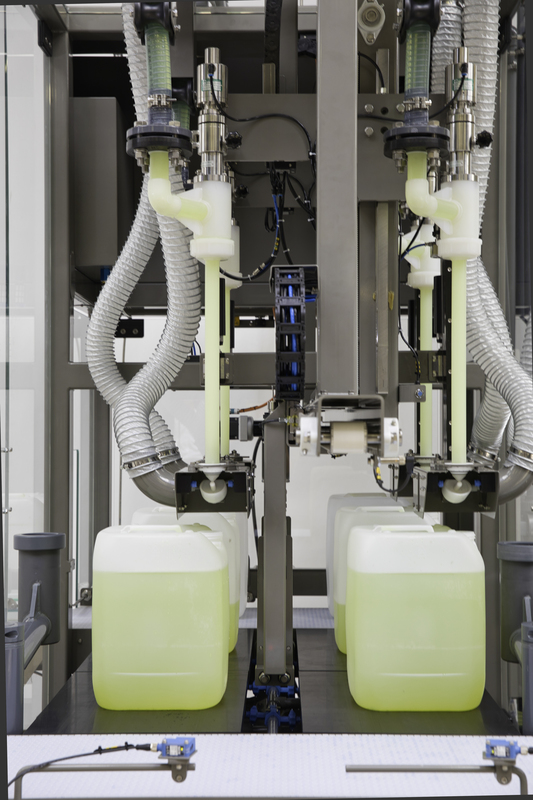
Gravity fillers work exceptionally well for thin, free-flowing liquids. Product flows from an overhead tank through filling nozzles controlled by valves. They’re simple, reliable, and cost-effective for straightforward applications.
Piston fillers excel with thick, viscous products that won’t flow freely. A piston draws product into a cylinder then pushes it through the filling nozzle. This positive displacement method delivers exceptional accuracy for products like sauces, pastes, creams, and products containing particulates. Whether you’re filling mayonnaise or chunky salsa, piston fillers maintain consistent fill weights that meet regulatory requirements whilst minimising overfill waste.
Pressure fillers push product through filling nozzles using compressed air or pump pressure. This approach suits slightly thicker liquids and provides faster fill rates than gravity systems. Pressure fillers handle products like oils, syrups, and light creams efficiently, maintaining good accuracy across different production speeds.
Peristaltic pump fillers use rotating rollers that compress flexible tubing, pushing product forward in a gentle, sanitary manner. The product never contacts the pump mechanism, making these fillers ideal for sterile applications, aggressive chemicals, or delicate products that shear easily. Pharmaceutical and cosmetic manufacturers frequently specify peristaltic systems for their contamination-free operation.
Inline or Rotary: Choosing Your Configuration
Beyond the filling method itself, you’ll choose between inline and rotary configurations; each suited to different production scenarios.
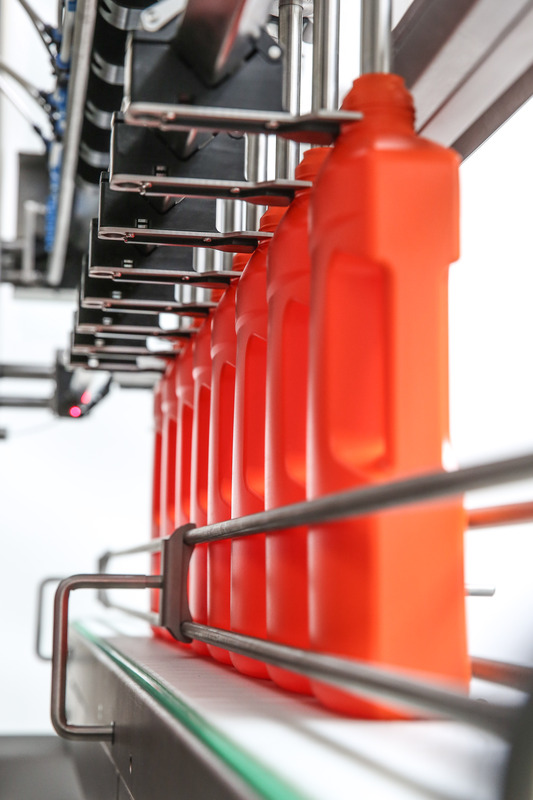
Inline fillers arrange filling heads in a straight line. Containers travel past each head sequentially. These systems suit lower to medium production speeds and offer excellent flexibility for format changes. If you frequently switch between container sizes or product types, inline fillers deliver straightforward changeovers that keep your production moving.
Rotary fillers position filling heads around a rotating carousel. Containers enter the carousel, rotate past filling stations, then exit completed. This continuous motion enables significantly higher speeds-rotary systems commonly fill hundreds of containers per minute. Large-scale beverage, dairy, and cooking oil operations typically specify rotary fillers where sustained high throughput justifies the investment.
Specifying Equipment That Matches Your Operation
Choosing appropriate filling equipment requires careful analysis beyond browsing supplier catalogues. Three critical factors determine which solution delivers optimal results for your specific circumstances.
Physical Properties
Product viscosity represents the primary consideration; thin products like water require completely different handling than thick products like yoghurt. Temperature adds another dimension. Hot-fill products need equipment designed for elevated temperatures, whilst chilled products require different considerations. Products containing particulates need filling systems that won’t clog or damage product pieces.
Foaming tendency matters significantly. Highly foamable products require gentle filling methods and may need bottom-up filling or special nozzles that minimise agitation. Chemical properties determine material compatibility; aggressive chemicals require specific wetted parts materials, whilst food products demand food-grade stainless steel construction.
Production Volume and Speed Requirements
Consider your required speed not just in containers per minute, but in total daily or weekly throughput. A slower filler running two shifts might meet your needs better than a high-speed line operating limited hours. Container variety affects system selection significantly. Operations filling multiple container sizes need equipment with quick changeover capability.
Small batch production suits semi-automatic fillers where operators position containers manually. Medium-scale operations benefit from automatic inline systems. High-volume production lines require fully automated rotary fillers integrated with upstream and downstream equipment.
Accuracy Standards and Regulatory Compliance
Fill accuracy requirements vary by industry and product value. Pharmaceutical and cosmetic products typically demand extremely tight tolerances, often within 0.5% of target fill. Food and beverage operations must meet net content regulations whilst minimising overfill waste.
Irish and EU regulations require specific weights and measures compliance. Your filling system must consistently deliver fills that meet legal requirements whilst minimising costly overfill. Modern fillers with programmable controls and servo drives achieve accuracy levels impossible with older technologies, translating directly to material cost savings and regulatory confidence.
Sneyders Filling Systems: Engineering That Delivers Results
Through our partnership with Sneyders, Obeeco supplies filling machinery recognised throughout Europe for precision engineering and operational reliability. Sneyders specialises in liquid filling equipment for food, beverage, pharmaceutical, and chemical industries, with systems ranging from compact semi-automatic units to high-speed production lines.
What sets Sneyders equipment apart is the integration of servo-driven accuracy, intuitive controls, and robust construction designed for demanding production environments. Their filling machines deliver repeatable accuracy across entire production runs. Programmable controls allow operators to set precise fill parameters, whilst integrated monitoring ensures consistent results batch after batch.
This precision directly impacts your operation’s profitability. Reduced overfill saves product costs-even a 2ml reduction per container adds up significantly across thousands of daily fills. Quick-change components enable format changeovers in minutes rather than hours. Intuitive touchscreen controls reduce operator training time and minimise errors.
Whether you’re filling water, cooking oil, dairy products, sauces, or liquid detergents, Sneyders offers filling solutions matched to your specific product characteristics. This versatility proves particularly valuable for contract manufacturers or operations producing multiple product lines-a single versatile filler can handle various products with simple changeovers, maximising equipment utilisation.
Integration, Hygiene, and Line Efficiency
Modern liquid filling rarely operates in isolation. Effective production lines integrate filling with upstream preparation and downstream packaging processes, creating seamless product flow that maximises output whilst maintaining quality standards.
Creating Cohesive Production Lines
Filling equipment must synchronise with container handling, capping, labelling, and case packing. Properly integrated systems maintain smooth product flow and eliminate bottlenecks. Obeeco works with manufacturers to design integrated solutions where filling equipment coordinates seamlessly with other line components.
Contemporary filling systems incorporate sophisticated process monitoring. Fill weight feedback enables real-time adjustments maintaining accuracy despite product temperature changes or container variations. Integration with facility management systems provides production data for analysis and continuous improvement.
Food Safety and Hygienic Design
For food and beverage manufacturers, hygiene represents a non-negotiable requirement. Modern filling machinery follows established hygienic design principles: smooth surfaces without crevices prevent product accumulation, sloped surfaces eliminate standing water, and accessible design enables verification of cleanliness.
Food-grade stainless steel resists corrosion whilst enabling effective sanitisation. Clean-in-place (CIP) capability allows automated cleaning of product contact surfaces without disassembly. Properly designed CIP systems reduce cleaning time whilst ensuring consistent, validated cleaning results – essential for operations producing multiple products or requiring frequent sanitisation.
Making the Investment Work: Commercial Reality
Selecting liquid filling equipment represents a significant investment requiring careful commercial evaluation beyond the purchase price alone.
Total Cost of Ownership
Initial equipment cost forms only one element of total ownership cost. Consider ongoing expenses including maintenance, spare parts, consumables, utilities, and operator labour. More expensive equipment with lower operating costs often delivers better long-term value.
Product waste represents a major variable cost that equipment selection directly influences. More accurate filling reduces overfill waste, whilst reliable operation minimises product lost to stoppages. On high-volume lines, these savings can recover equipment costs surprisingly quickly, sometimes within 18-24 months for operations with expensive ingredients.
Faster changeovers enable more flexible production scheduling. Reduced downtime translates directly to increased saleable output. Calculate realistic ROI based on your actual production requirements, considering both cost savings from improved efficiency and potential revenue increases from additional capacity.
Planning for Growth
Consider your growth trajectory when specifying equipment. Systems that accommodate increased speeds or additional filling heads can scale with your business, protecting your investment. However, avoid over-specifying initially. Equipment sized significantly beyond current needs costs more upfront and may operate inefficiently at lower speeds.
Why Irish Manufacturers Choose Obeeco
With over 45 years serving manufacturers across Ireland and Northern Ireland, we’ve developed a consultative approach to equipment specification that ensures the filling system you invest in genuinely matches your operational needs; not just on paper, but in the daily reality of your production environment.
We begin by understanding your product characteristics, production volumes, and operational constraints. This detailed analysis prevents the common mistake of specifying equipment that technically works but doesn’t suit your actual operation. We consider your facility layout, utility availability, existing equipment integration, and future plans.
Our relationship extends well beyond equipment delivery. We provide technical support throughout installation, commissioning, and ongoing operation. When questions arise or adjustments are needed, our experienced team offers practical guidance based on decades of industry experience.
For payment, Obeeco offers secure transactions exclusively through bank transfer for all equipment purchases. This straightforward approach ensures transparent, documented transactions whilst maintaining clear financial records.
Start Your Production Optimisation Journey
Liquid filling equipment represents a critical investment in your manufacturing capability. The right system delivers consistent product quality, operational efficiency, and reliable performance across demanding production schedules – qualities that directly impact your competitiveness.
Whether you’re establishing a new production line, upgrading existing equipment, or addressing specific filling challenges, Obeeco provides the expertise and equipment solutions that Irish manufacturers trust for precision, reliability, and long-term value.
Ready to discuss your liquid filling requirements? Contact Obeeco today on (+353 1) 278 2323 or email sales@obeeco.ie to arrange a consultation. Let’s identify the filling solution that optimises your production process and delivers the consistency your operation demands.